
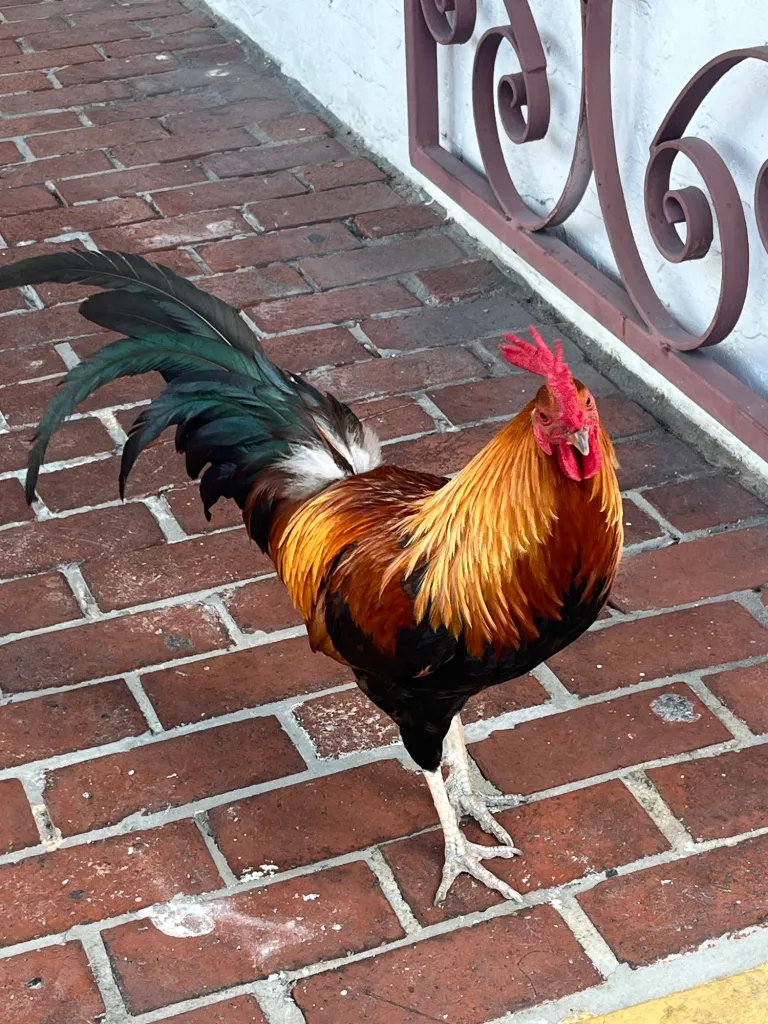
The History of Gypsy Chickens in Key West and Their Colorful Life Today
If you’ve ever wandered the streets of Key West, Florida, you’ve probably noticed them before the other tourists even do – bright-feathered roosters strutting across sidewalks, hens leading tiny chicks through parking lots, and the unmistakable sound of crowing echoing between pastel buildings. These famous birds are known locally as “gypsy chickens” and they’ve become one of the island’s most unexpected and beloved symbols.
But these aren’t just quirky street animals. Their story is deeply tied to Key West’s history, culture and changing way of life.
How the Gypsy Chickens Came to Be
Chickens have been part of Key West since the earliest settlers arrived in the 1800s. Families kept them for food and eggs, as was common in small island communities. Over time, these backyard flocks mixed with the island environment and began to roam more freely.
A major shift came in the mid-20th century. During the 1950’s, Cuban immigrants arrived in Key West, many working in the cigar industry. Some brought chickens with them including breeds associated with cockfighting traditions. When cockfighting was outlawed in the 1970’s, many of these birds were released into the wild.
At the same time, modernization changed daily life on the island. Supermarkets made store-bought eggs and meat easy to access, so fewer residents kept backyard chickens. Without coops and constant care, may birds simply wandered off and never came back.
Over decades, these scattered flocks bred freely, adapted to the island environment and became what locals now call gypsy chickens.
Why They Thrive in Key West
Key West turned out to be an ideal home for feral chickens. The climate is warm year-round, predators are relatively limited, and food scraps are easy to find in a busy tourist town. The island’s compact geography also helped the population remain concentrated and visible.
These birds have become incredibly adaptable. They forage in gardens, snack outside cafes and even roost in trees at night. They’ve learned to cross roads confidently – often forcing drivers and pedestrians to stop and wait their turn.
Protections Granted
These birds are protected and that surprises many visitors. Key West has local protections in place that make it illegal to harm or kill the chickens. Over the years, the city has also struggled with managing their population, balancing public nuisance complaints with strong public affection for the birds.
Efforts have included humane relocation programs and feeding restrictions in certain public areas, but the chickens remain firmly part of the landscape.
Life in Key West Today
Today, gypsy chickens are more than just wildlife – they’re part of the island’s identity.
They wander through Duval Street like they own it. They appear in cemetery paths, beach parking lots, hotel courtyards, and restaurant patios. Tourists take photos of them like they would a monument. Locals argue about them like they would any long-term neighbor – some love them, some tolerate them, but nobody ignores them.
And in many ways, they perfectly reflect Key West itself; colorful, a little chaotic, independent and impossible to fully control.
A Living Symbol of the Island
The gypsy chickens are now part of Key West folklore. Souvenir shops sell rooster-themed everything, from mugs to T-shirts. Guided tours point them out like landmarks. And every visitor eventually learns the same lesson – on this island, even the chickens do things their own way.
So, next time you hear a sudden crow in the middle of the afternoon while walking through Old Town, don’t be surprised. That’s not just a chicken.
That’s history walking right past you.
